
Press Release – Geneva, Swiss Press Club
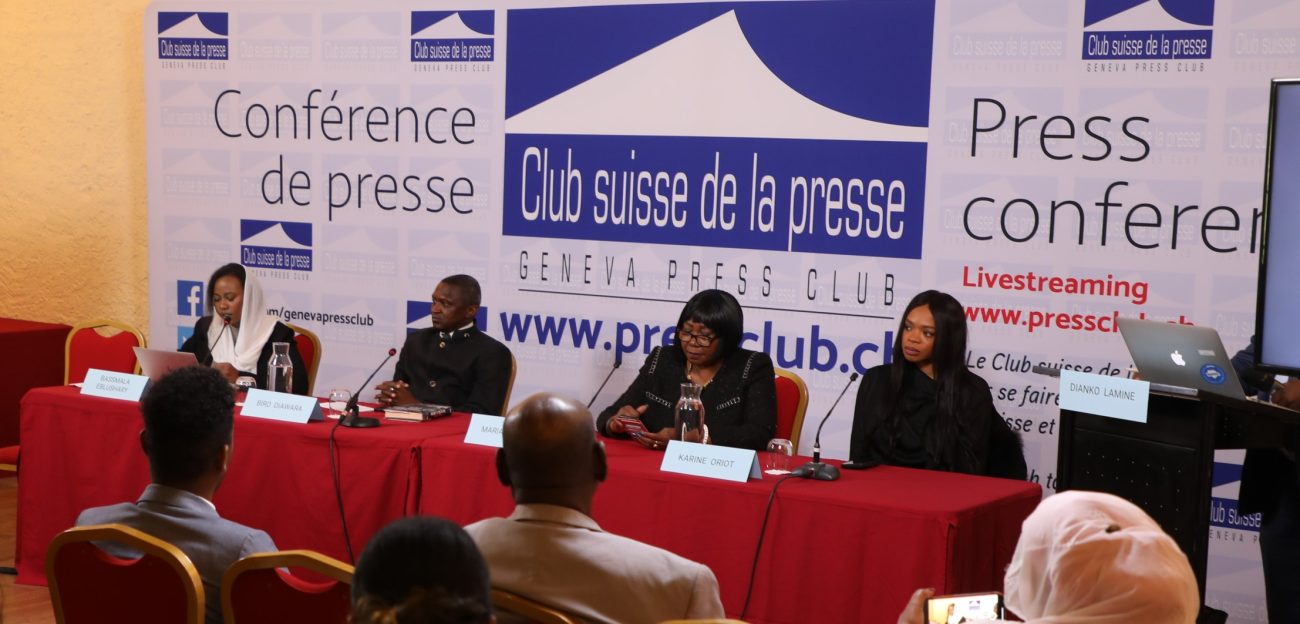
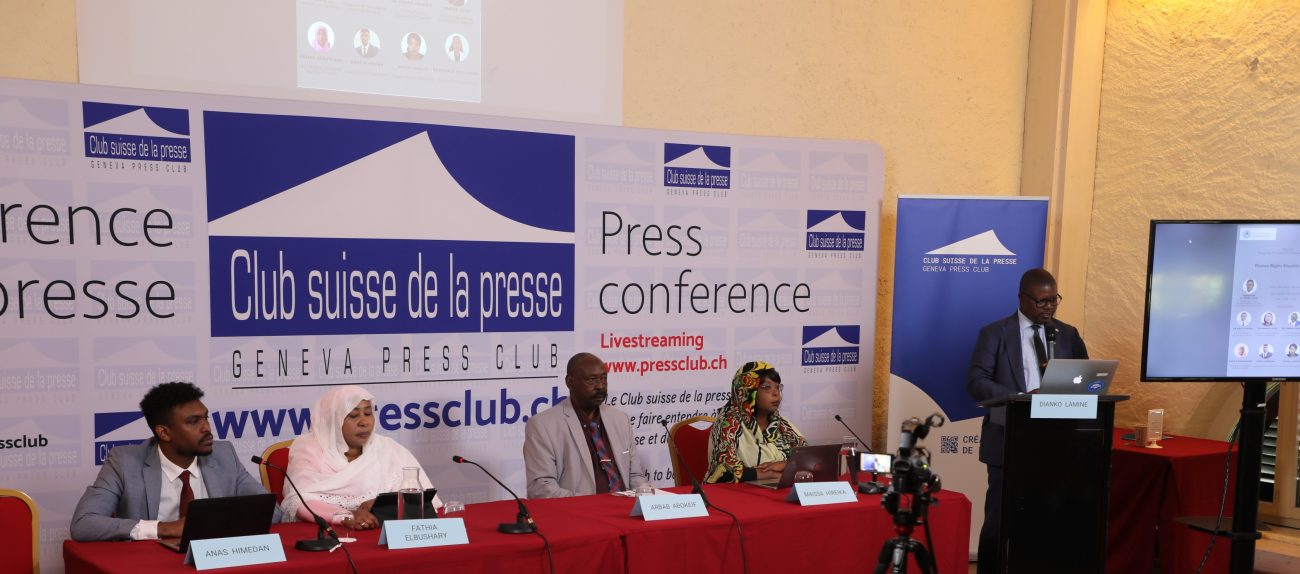
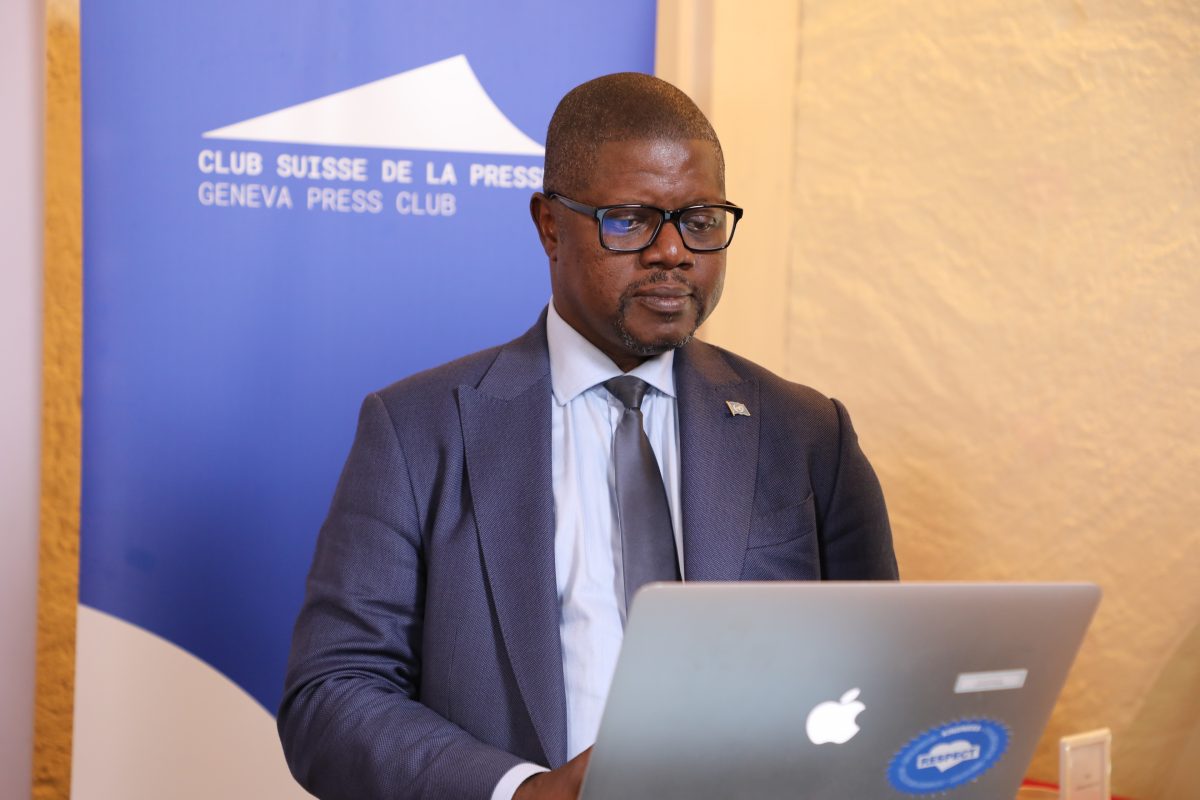
The Sudanese Human Rights Organizations Federation, in cooperation with several Sudanese human rights centers, civil society institutions, and international NGOs with consultative status at the United Nations, organized an international symposium titled “Violations and Crimes by the Sudanese Army Against Civilians in Sudan.” The event was held on 30 September 2025 at the Swiss Press Club in Geneva, on the sidelines of the 60th Session of the UN Human Rights Council. It was attended by numerous international experts, leaders of international and African organizations, and postgraduate students of international relations and human rights.
The symposium featured contributions from prominent Sudanese and international experts, human rights defenders, and media representatives, including Dr. Arbab Ahmed Abukif, Dr. Mariam Shaw, researcher Anas Hamdan, Dr.Fathiya, activist Baraa Markaz, journalist Karen Ario, and others. Participants presented in-depth papers and interventions addressing various aspects of the Sudanese crisis, underscoring the direct responsibility of the Sudanese Army in escalating violations against civilians.
Speakers highlighted that over 30 million people face acute food insecurity, half of them women and children, amid indiscriminate bombardments targeting markets, hospitals, and vital infrastructure. The Sudanese Army was identified as directly responsible for the collapse of the health and education systems and the mass displacement of millions, making Sudan’s crisis one of the worst humanitarian disasters globally.
Papers also exposed massacres in Darfur, Kabmo Taybah, and Al-Jazira, where hundreds of civilians, including women and children, were killed. Arbitrary arrests, enforced disappearances, and the systematic use of sexual violence as a weapon of war were cited as patterns of crimes by the Sudanese Army designed to terrorize local communities — acts amounting to war crimes and crimes against humanity requiring international accountability.
Discussions further addressed the role of extremist and terrorist groups in fueling the armed conflict, pointing to the involvement of the Muslim Brotherhood and its allies in providing logistical and human support to the Sudanese Army. Experts emphasized that these groups not only inflame the conflict but have directly participated in atrocities against civilians, entrenching the army’s grip on the state.
A dedicated segment focused on the plight of Sudanese women and girls, highlighting egregious abuses such as gang rape, sexual slavery, and forced marginalization. Experts stressed that these violations are systematic, employed as a weapon of war to destroy social cohesion and instill fear — exposing the Sudanese Army’s responsibility in orchestrating repressive policies.
Other presentations documented the use of chemical and internationally prohibited weapons by the Sudanese Army, with testimonies and reports confirming civilian areas struck with shells containing toxic gases, suffocating odors, and severe burn injuries. These practices constitute blatant violations of the Chemical Weapons Convention and international humanitarian law, placing the Army directly in the dock for war crimes requiring condemnation and prosecution.
Participants also highlighted the use of mercenaries by the Sudanese Army, with reports of local and foreign militias recruited to fight civilians and target infrastructure. Such practices represent a flagrant breach of international humanitarian law, turning civilians into fuel for a war waged through mercenary forces devoid of legal or humanitarian obligations.
Speakers further underscored the dire situation for journalists in Sudan, noting they have become direct targets of the Army’s campaigns of arrest, threats, killings, censorship, and information blackouts. They stressed that the Army’s war aims not only to annihilate civilians but also to silence every voice seeking to expose the truth.
The symposium concluded by stressing the urgent need for international action. Participants warned that the silence of the global community encourages continued atrocities. They called for immediate measures through UN Human Rights Council mechanisms and for strengthening accountability before the International Criminal Court as the only viable path to save civilians and halt the Sudanese Army’s violations.
The event’s final message was a clear call to the international community to intensify efforts to stop the atrocities, protect civilians, and end the war waged by the Sudanese Army against its people. The Sudanese tragedy, participants affirmed, is a true test of the international system’s ability to uphold human rights and human dignity.

Arbab Idries